 |
| Image: diariolabrador.cl |
If you're looking for a day trip from Santiago that blends culture, cuisine, and nature, consider visiting Pomaire. This small town, renowned for its traditional pottery and oversized empanadas (Chilean turnovers), has a population of around 5,000 residents. Located in the municipality of Melipilla, it lies about 50 km west of Santiago and is easily accessible via Route 78, also known as the Autopista del Sol.
Pomaire has indigenous roots that date back to pre-Hispanic times. While the exact origin of its name remains uncertain, some theories suggest it may come from native languages such as Quechua or Aymara.
Today, Pomaire is an ideal destination for travelers seeking an authentic experience of Chilean culture and folk art. It is well known among Chileans for its deep-rooted traditions and proximity to the capital. However, for many international tourists, Pomaire remains an undiscovered gem. Highlights include numerous pottery workshops scattered throughout the town, where visitors can watch artisans at work and even try their hand at crafting their own clay pieces.
How to Get There
 |
| Piggy banks, handicraft |
As mentioned earlier, Pomaire is located about 50 km (31 miles) west of Santiago, Chile. The easiest way to reach it is by car or bus via Route 78 (Autopista del Sol), taking the Pomaire exit near the town of Melipilla. The drive from downtown Santiago takes approximately one hour.
Buses to Melipilla depart regularly from Santiago’s San Borja Terminal. From Melipilla, you can take a local taxi or minibus to Pomaire — a short ride of about 15 minutes.
Traditions
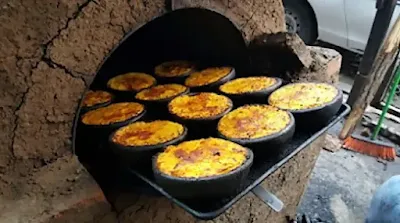 |
| "El Cototudo" Restaurant |
But Pomaire is not only known for its handicrafts; it also offers delicious traditional food. Local specialties include cazuela (hearty soup made with hen, pork, or beef), Chilean empanadas, arrollado (rolled pork), pernil (pork leg), pastel de choclo (corn pie), chancho en piedra (a spicy tomato and garlic sauce), and the much-loved humitas (corn-based tamales).
Empanadas, one of Chile’s most iconic foods, are turnovers filled with meat, cheese, seafood, or vegetables and traditionally baked in clay ovens. Pomaire’s empanadas are particularly famous for their size—some weighing up to a kilogram!
It’s also worth mentioning that TasteAtlas, an online platform specializing in traditional food from around the world, ranked chancho en piedra as “The Best-Rated Salsa in the World 2023.” Pomaire’s main streets, Roberto Bravo and San Antonio, are lined with pottery shops and restaurants that compete to attract hungry visitors.
Nearby Attractions
Near Pomaire, you can explore the Rutas del Vino (Wine Routes), where several vineyards offer tours and tastings of high-quality Chilean wines.
Although it's located just over 70 kilometers from Santiago, many tours combine a visit to Pomaire with a stop at the house of Nobel Prize-winning poet Pablo Neruda in Isla Negra, now a museum on Chile’s central coast.
✅ Quick Answers for Curious Travelers
Pomaire is famous for its traditional clay pottery, handcrafted by local artisans using techniques passed down through generations. It’s also renowned for its hearty Chilean cuisine, especially the oversized empanadas.
Pomaire is a small town about 50 kilometers (31 miles) west of Santiago, in Melipilla Province. It’s an easy day trip from the capital.
Clay cookware, decorative pottery, garden pots, handmade souvenirs, woven goods, and local sweets are among the highlights.
Don’t miss the giant empanadas, pastel de choclo (corn pie), cazuelas, and fresh breads baked in clay ovens. Many restaurants serve meals in locally made clay dishes.
Yes. The town is safe, walkable, and filled with family-friendly shops and restaurants. Kids especially enjoy watching potters at work or trying small pottery workshops.
Weekends are livelier with more shops open, while weekdays are quieter. Spring and summer offer pleasant weather for walking the town.
Yes. Many workshops let you watch artisans at work, and some even allow you to try shaping clay yourself.
Drive via Route 78 (Autopista del Sol), or take a bus toward Melipilla and transfer to a local bus or taxi. The trip takes about an hour by car.
Some larger shops and restaurants accept cards, but many small vendors prefer cash. Bring Chilean pesos to be safe.
Yes. Nearby you can visit vineyards, explore Melipilla for more local culture, or head to the coast for beaches like San Antonio or Cartagena.
A half-day visit is enough for shopping, lunch, and a stroll. Many travelers combine it with a winery visit or a trip to the coast.
Yes. Pomaire has parking lots near the main streets, and many restaurants also offer spaces for customers.
Yes. Some artisans offer short workshops where visitors can shape clay and take home their creations.
The main streets are flat and walkable, but some sidewalks are narrow. Many shops and restaurants are accessible, though not all.
Yes. Several operators in Santiago offer day tours that include transport, a meal, and a guided walk through the town.
Comments
Post a Comment